


Crown & CrossA generational vision Download PDFComplete illustrated vision
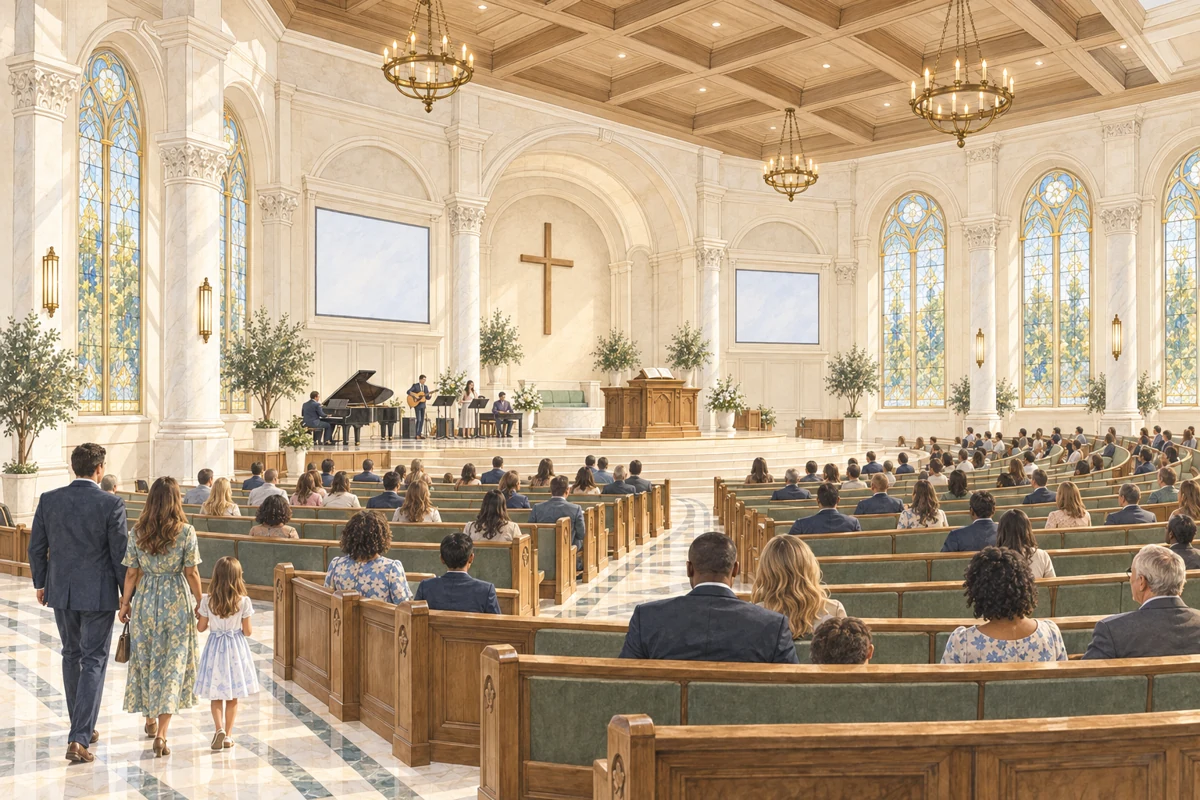
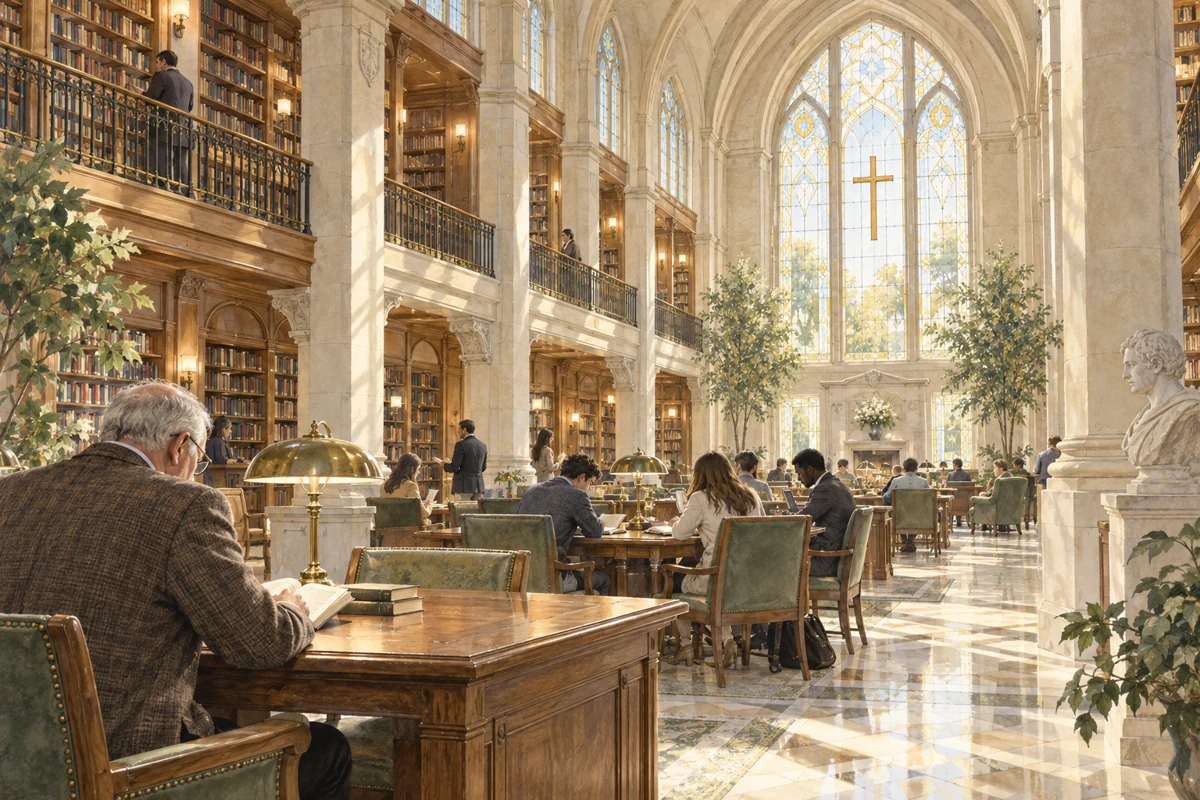
Faith, worship, and family life at the heart of the community. Architectural concept.

Crown & Cross

A proposed Christian community in Tampa Bay

Let our children inherit
a beautiful place.

Faith, worship, and family life at the heart of the community.

Choose a view

Architectural concepts · A vision to build across generations

The life we want to build

Let our children inherit
a beautiful place.

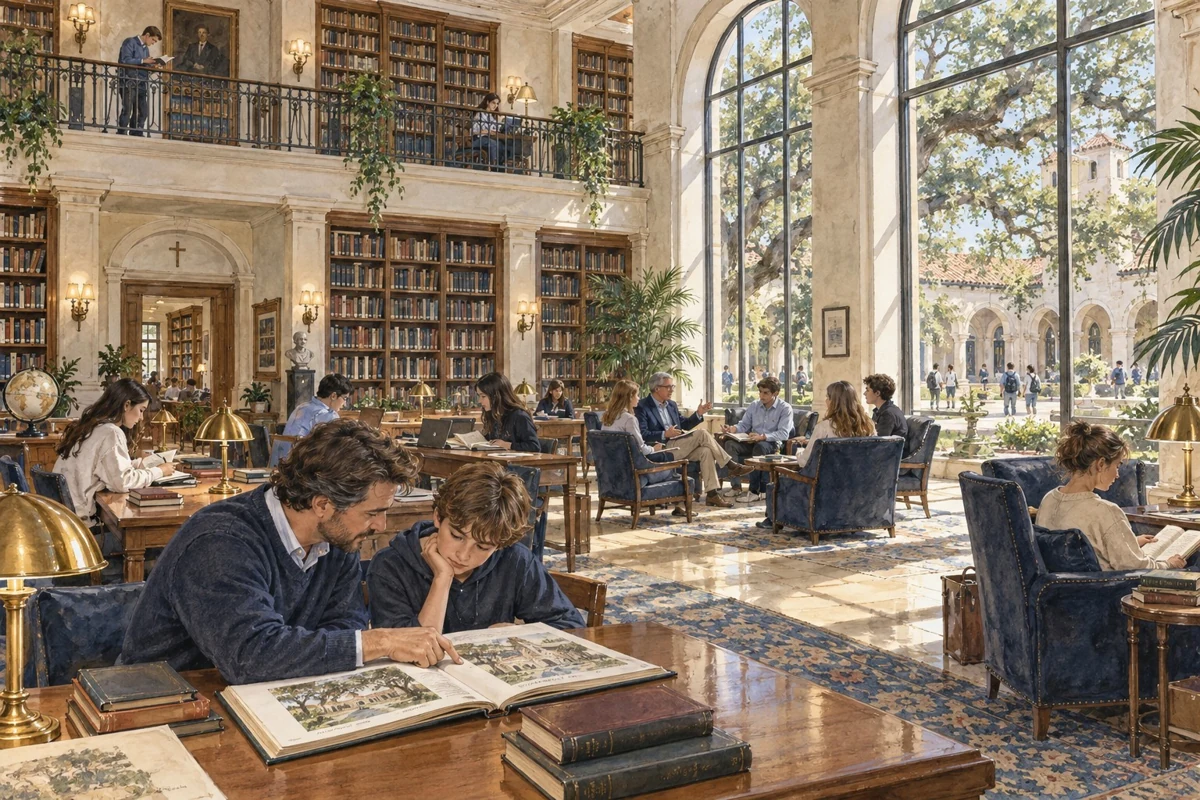
We want our children to grow up within reach of a church whose doors open onto a common life.

On Sunday, they hear the Scriptures read and the gospel preached. During the week, they learn in rooms filled with books and daylight. Their parents have friends nearby, teachers they trust, and help with the demanding work of raising a family.

As those children grow, they can pursue an education, learn a profession, meet a husband or wife, and establish a household of their own. Employers can offer a first serious job. Experienced Christians can help them prepare for marriage and work toward a first home.

Crown & Cross seeks to build this life in Tampa Bay. Books, music, films, teaching, and professional partnerships will carry its work across the country.

2047

The intended public launch of the whole vision.
Construction and expansion will continue across generations.

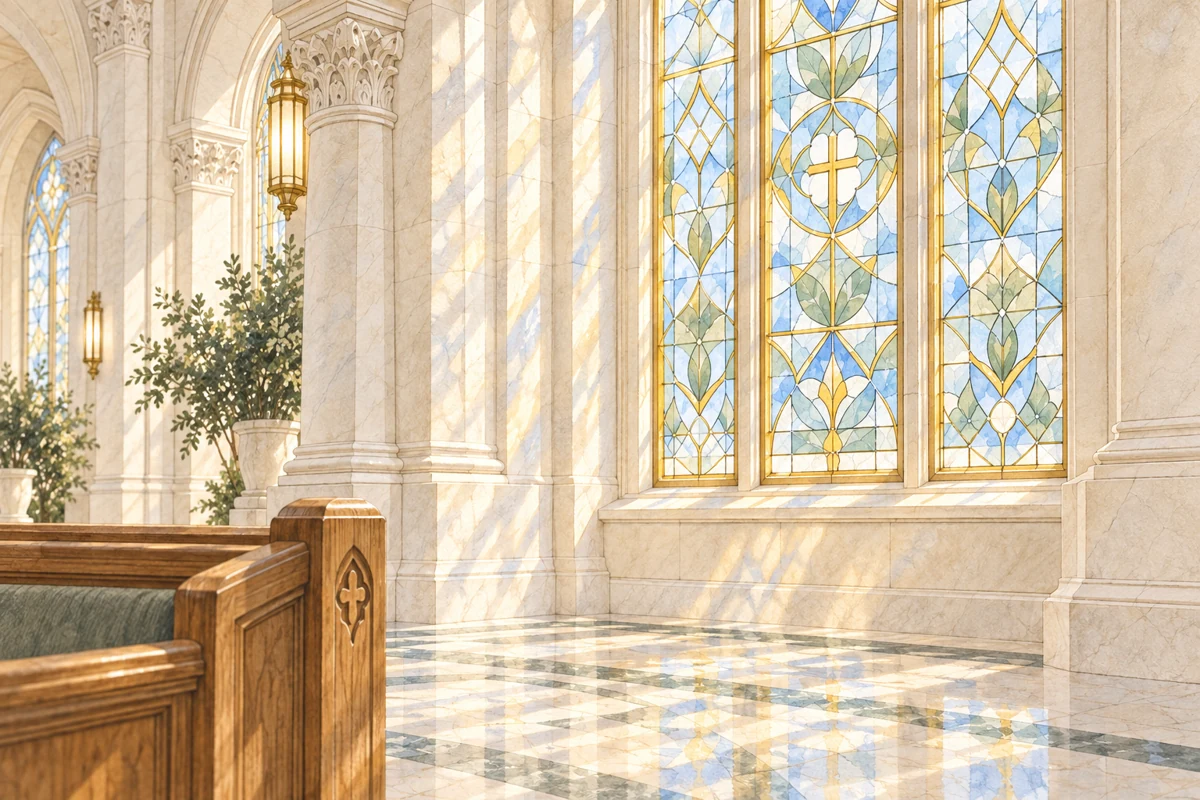
Concept of sunlight through classical stained glass onto pale stoneArchitectural concept

Jesus Christ
is Lord.

We want to honor Him in the way we worship, teach our children, conduct business, care for our neighbors, and build.

Crown & Cross will be explicitly Christian. Scripture will govern its doctrine, moral teaching, and understanding of human life. Christ Church Tampa will worship within the Protestant and Baptist tradition, with qualified elders responsible for the congregation.

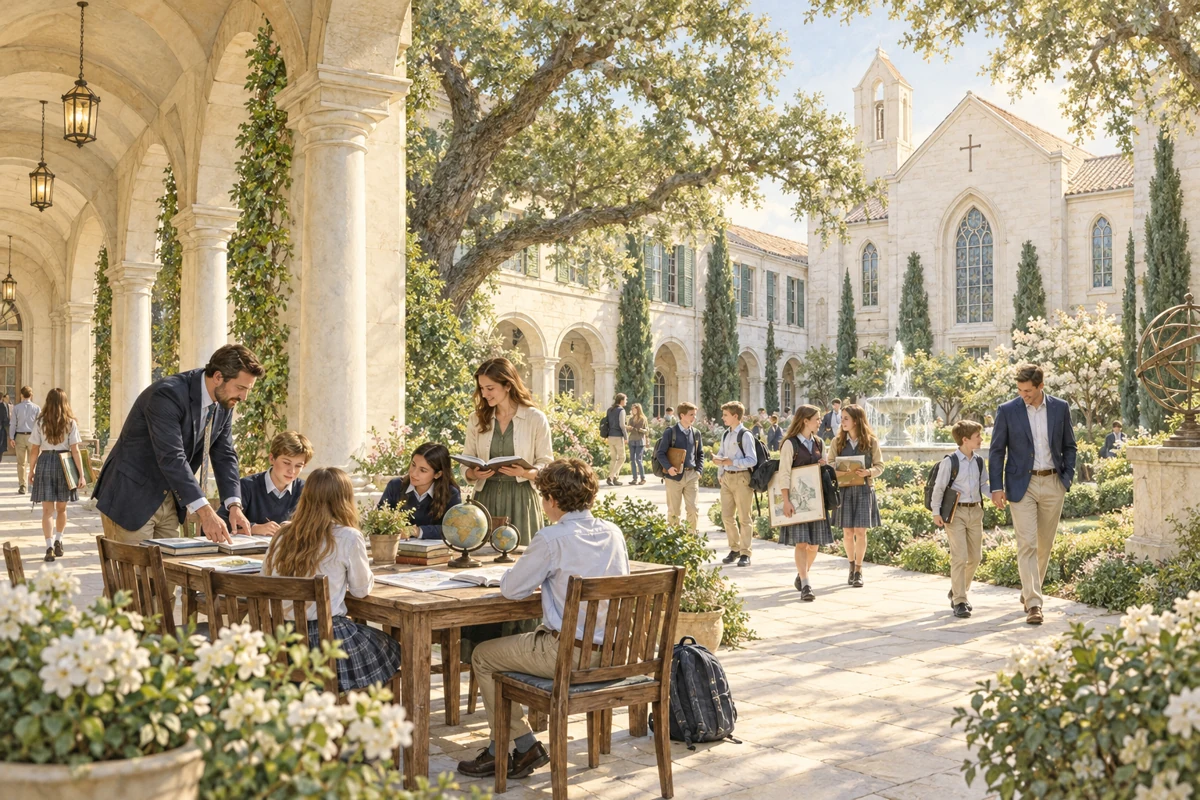
Education will prepare people for Christian responsibilities in the household, church, business, the professions, and public office. The work begins with people who will carry those responsibilities faithfully.

Christ Church Tampa

A church at the center
of the community.

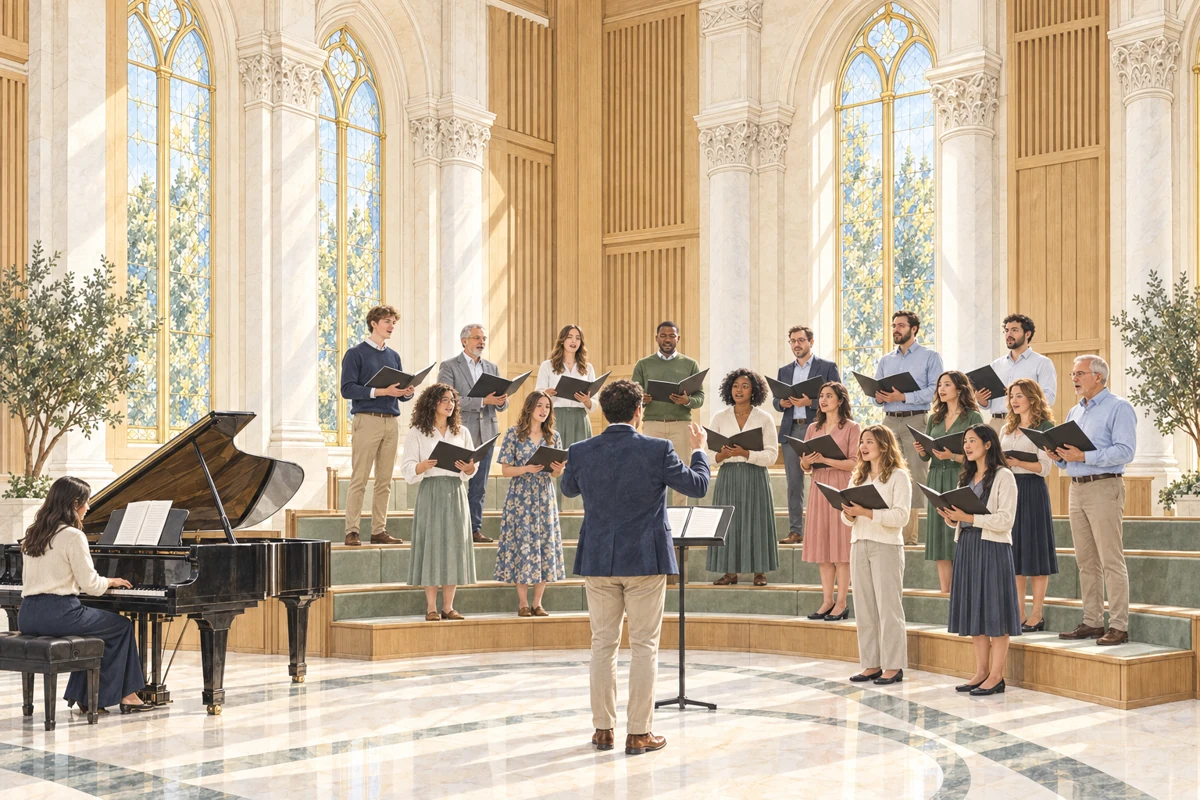
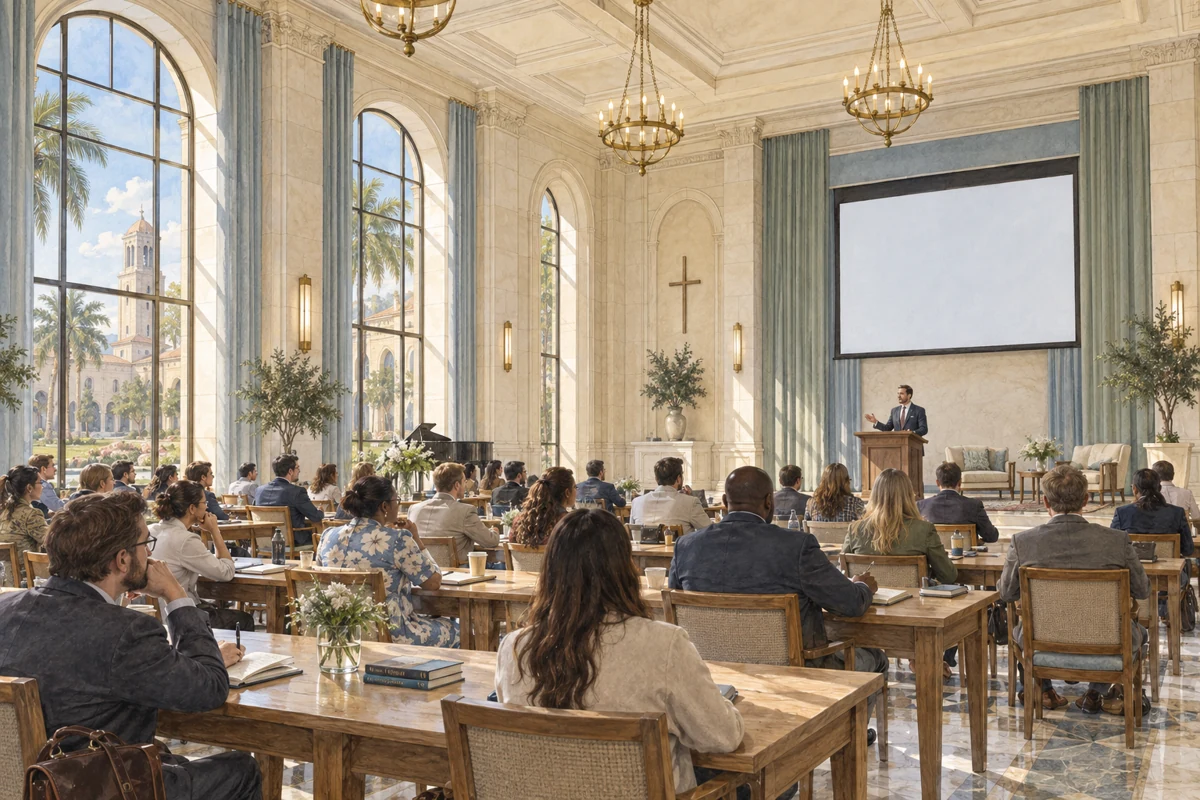
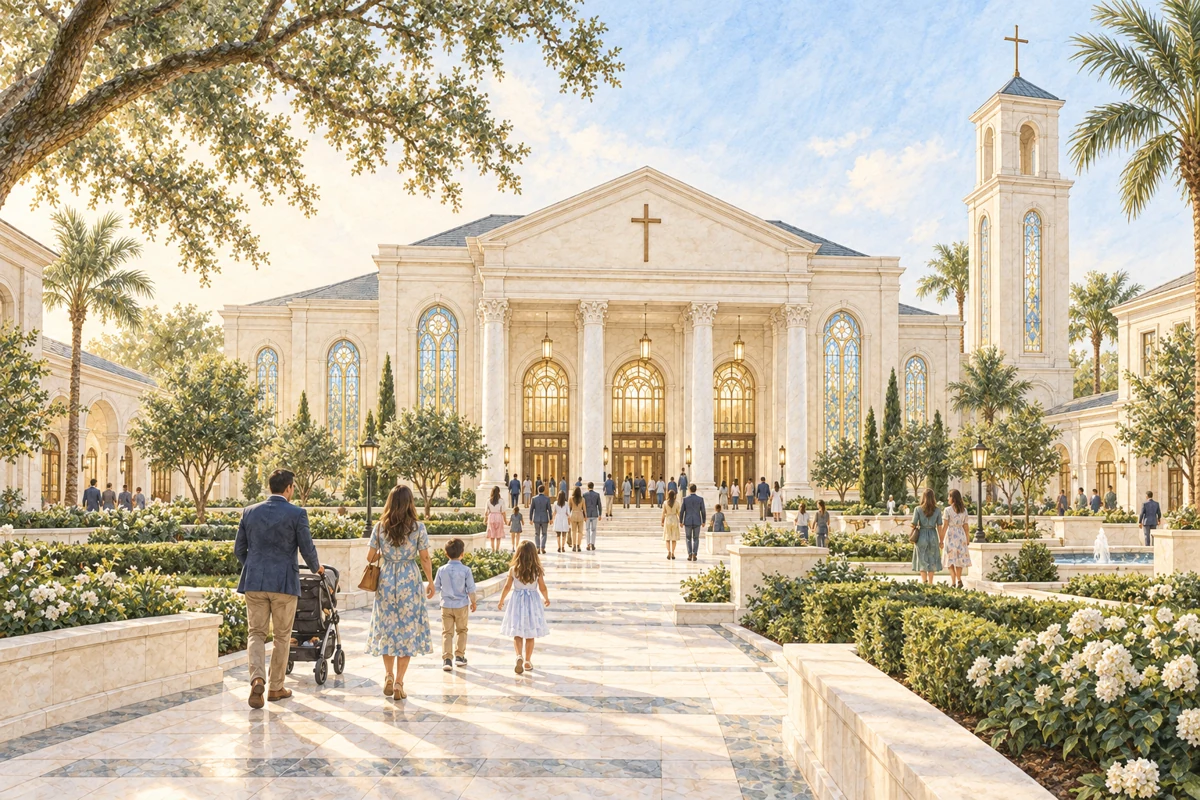
Preaching, prayer, baptism, the Lord’s Supper, and congregational singing will be central to the life of this place. Its architecture should be worthy of the work.

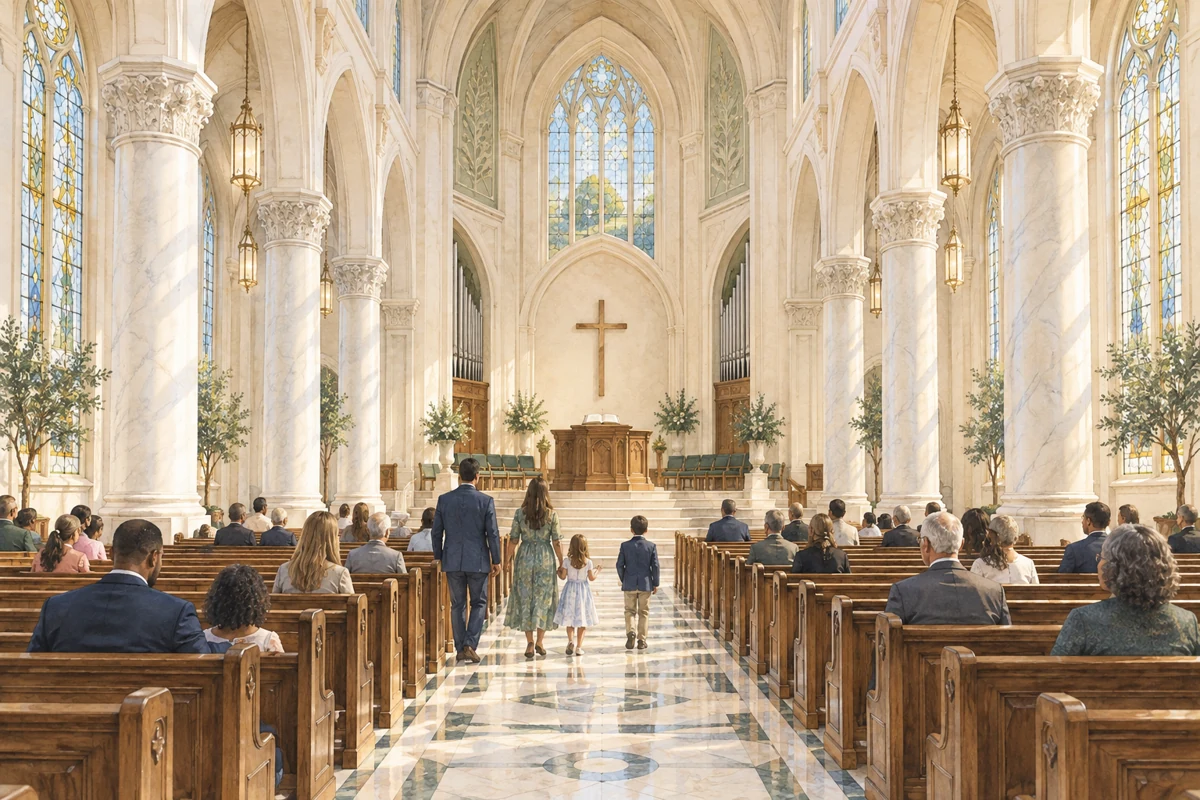
The sanctuary, architectural concept

The sanctuary

The principal room for preaching, baptism, prayer, and congregational singing. Classical stone and marble, clear sightlines, and discreet modern technology.

Architectural concept
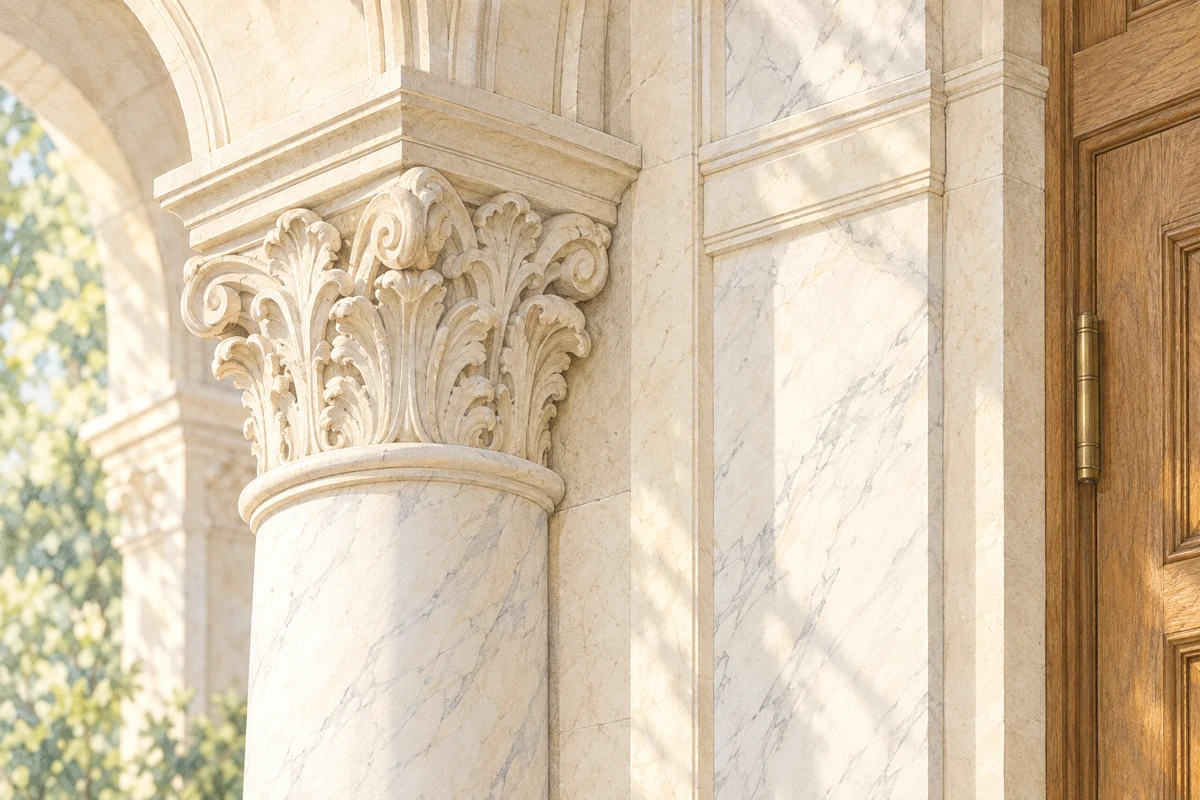
Pale marble and carefully finished stone, architectural material concept
Stone and marble
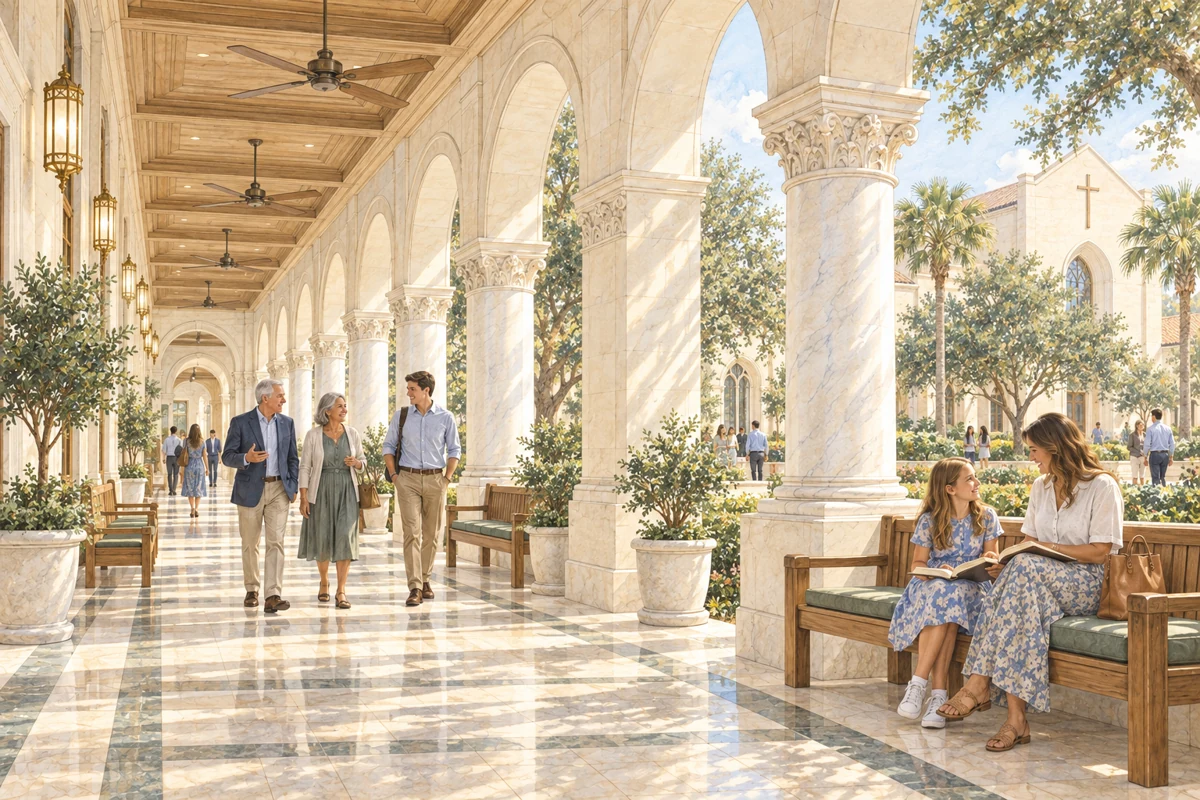
A shaded classical arcade with a planted courtyard
Light and shade
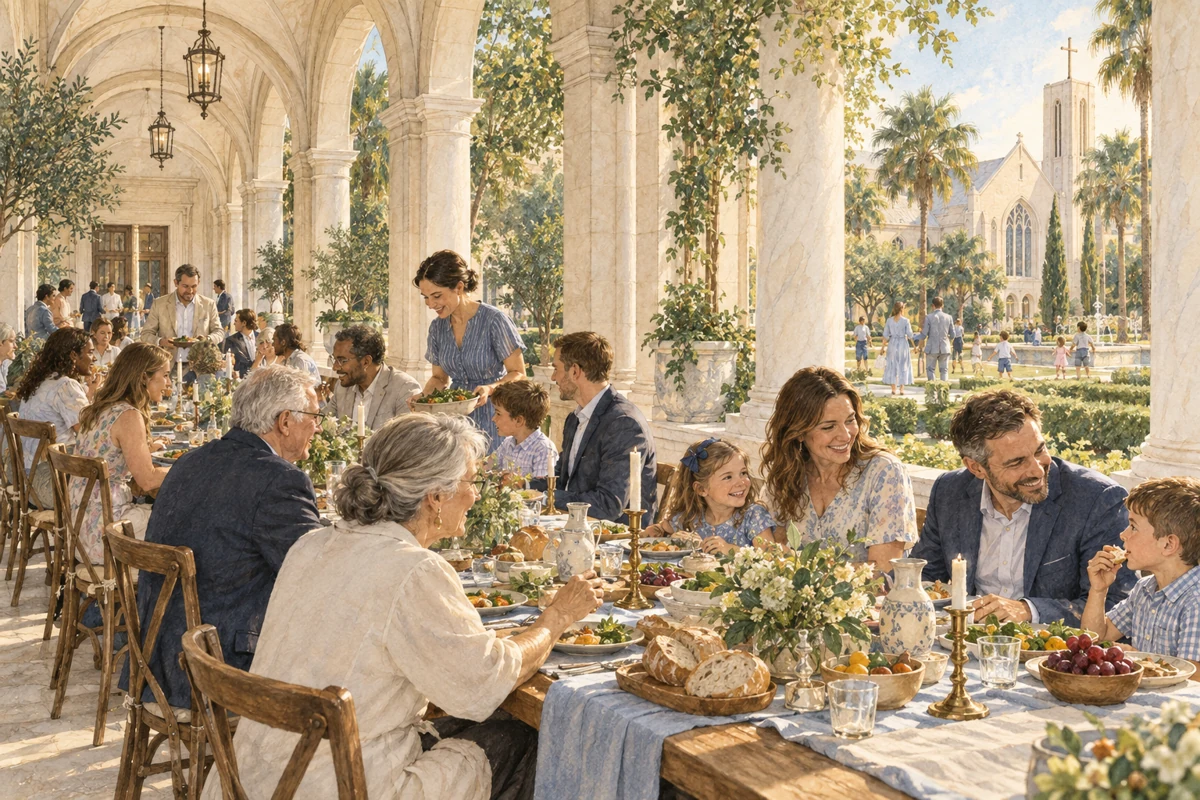
A shared meal in a bright classical hall, concept illustration
A place to gather
A family on a neighborhood porch, architectural concept
A life across generations

A good education.
Useful work.
A household of their own.

People will choose their own course of study, employment, spouse, and home. Crown & Cross will make good opportunities available and help families use them well.

The institutions

The institutions
we intend to build.

The full vision includes education, the professions, cultural work, and family life. Each institution needs qualified leaders, a first useful offering, and the resources to sustain it.

Explore the work

Select a field to explore its people, purpose, and first steps.

1 / 12
The homeschool academy, concept illustrationConcept illustration
Family & education

Strong classes and a full childhood, with parents directing the education.

Families choose subjects, laboratories, teachers, sports, and music. Staff coordinate recurring classes, home study, team practices, matches, music lessons and rehearsals. Teachers set clear expectations for coursework and report progress.

The academy coordinates the timetable, qualified teachers, supervised spaces, and student conduct. Parents choose the workload. Separately staffed activities can serve younger siblings during the same visit, with published fees or funded places.

Where it begins

Begin with a small schedule in leased rooms and grow after families renew.

What we will measure

Report distinct children and households, completed courses, progress in learning, and family retention.

How it is supported

Standard classes can cover their recurring costs with a funded timetable and sufficient enrollment. Gifts support opening costs, permanent facilities, targeted aid and more intensive teaching. Florida scholarship payments depend on each family and approved expenses.
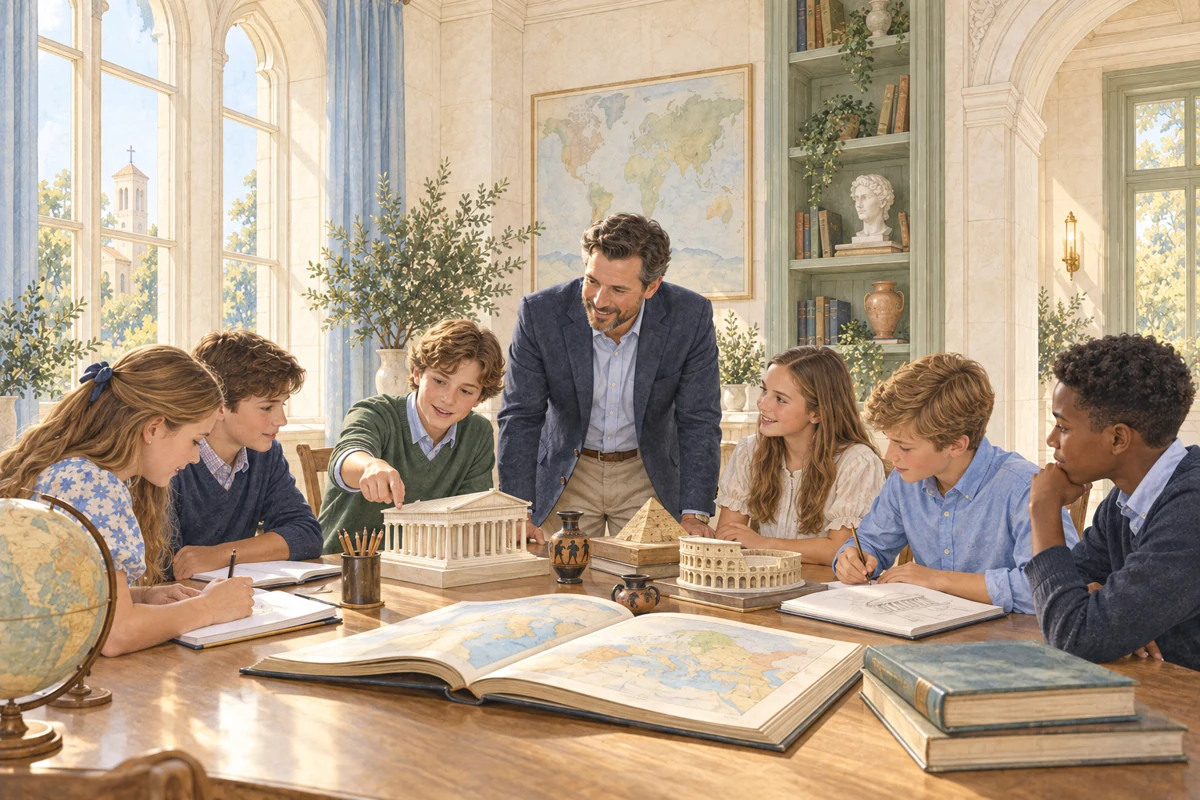
A further view of the homeschool academy, concept illustration
Family-directed education

A full week,
with more within reach.

Classes, home study, team practices, music, and time with friends require a coordinated calendar. Each family chooses how much of that week takes place here.

Classes & study, life concept

Build the timetable around the family.

Families choose subjects, teachers, and the amount of teaching they want on campus. Staff group compatible courses into useful blocks and coordinate sibling schedules. Supervised study and younger-child activities require separately staffed sessions with published fees or funded places.

The timetable must account for teacher availability, classroom capacity, laboratory sessions, age groups, and the time families spend traveling.

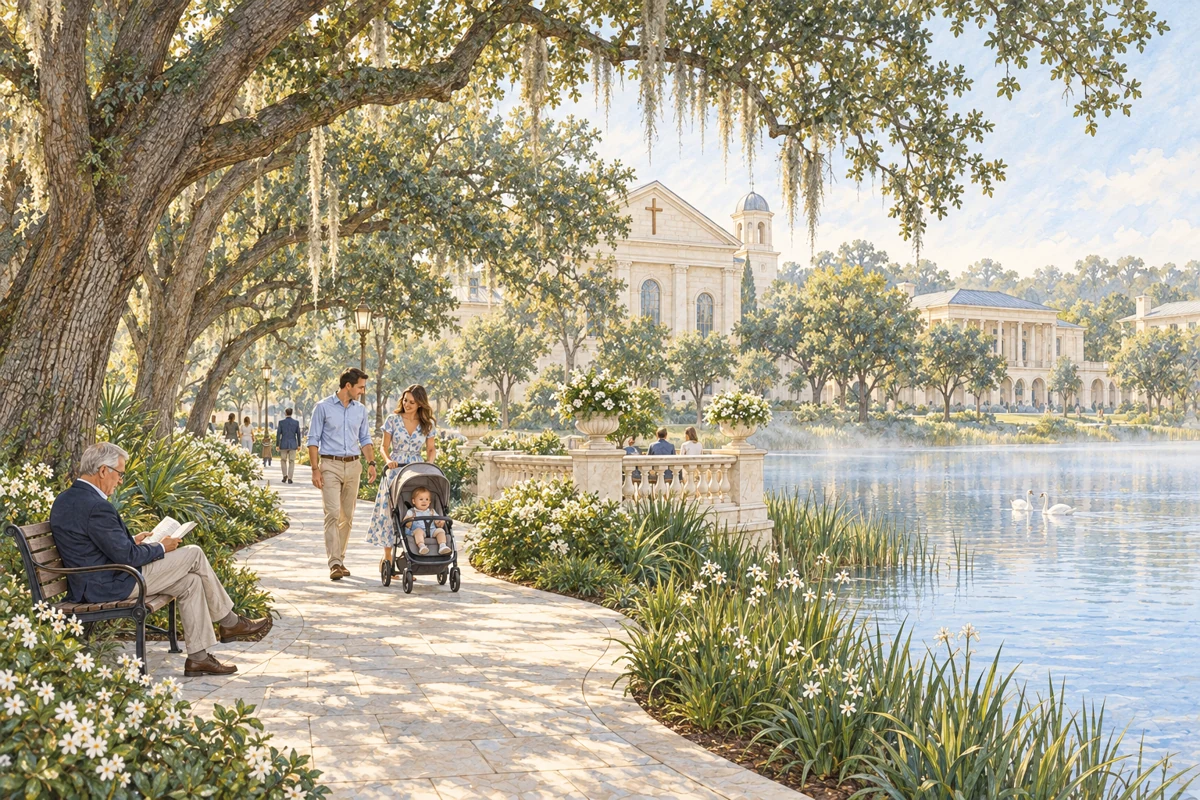
A garden and lake walk with classical architecture in the distance, concept illustration
The place

Beautiful enough to visit.
Useful enough to live in.

Place the church, teaching, books, music, gardens, and daily needs within walking reach. Give the homes privacy, the institutions room to work, and visitors a clear welcome.

Architectural concept
Explore the garden town

Come a little closer.

Find the church, walk through the gardens, and look inside the places we intend to build.

Crown & Cross · Tampa Bay

A town shaped
around its people.

Neighborhood greens, shaded streets, courtyards, and gardens. An architectural concept on unselected land.

About the illustration & measured study

The map presents one possible arrangement of the town. Select a building to see another concept view of its purpose and character. Building sizes, home counts, and walking times will follow a selected site and professional design.

The separate 600-acre measured study explores scale and access with a different layout. Its distances apply to that study.

Open the separate measured study (PDF) ↗Download the measured geometry
Crown & Cross

The garden town

Garden-town architectural concept

Drag to explore · Select a landmark

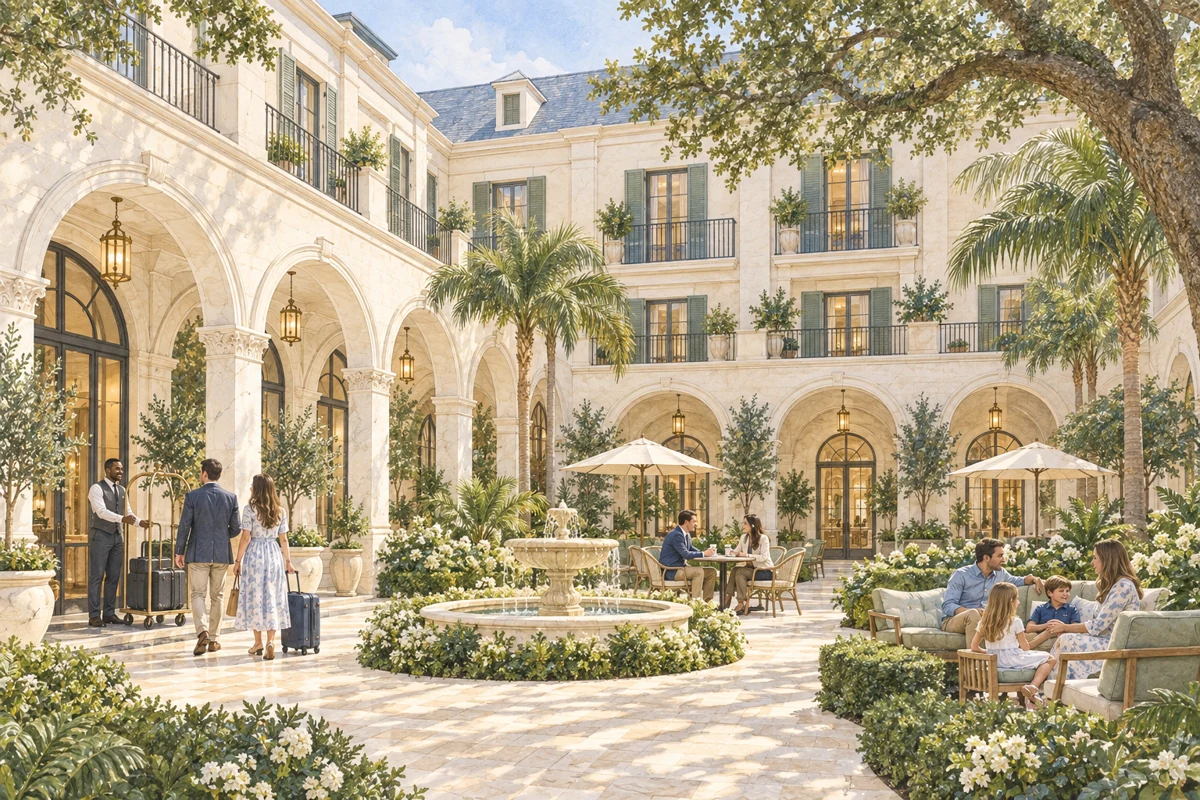
A proposed pedestrian visitor street with independent shops and restaurantsAn optional hotel courtyard, architectural concept
Visitors & the commercial district

Give people a reason
to come back.

Gardens, concerts, lectures, books, shops, restaurants, and beautiful architecture can make this a destination for people across Tampa Bay and beyond.

Commercial tenants need enough paying customers to cover their rent and costs. A hotel needs an independent lodging study, an operator, and viable construction economics. Each business should earn its place in the plan.

The first visitor income can come from ticketed programs, events, retail partnerships, and existing venues. Permanent property follows demonstrated demand and a funded site plan.

Examine the income opportunities
The economics

Build a mission
with lasting support.

Keep education affordable. Develop businesses that serve outside customers. Raise gifts from people and institutions who share the mission. Invest permanent funds for future generations.

Families & students

Pay published, affordable charges for the services they choose.

Outside customers

Buy books, licenses, production, training, and commercial services.

Patrons & institutions

Fund teaching, scholarships, ministry, buildings, and permanent support.

Invested gifts

Provide a controlled annual distribution from a funded endowment.

Noble is an acquisition and scaling company intended to help establish Crown & Cross as a founding patron and employer partner. Recurring support will also come from other patrons, institutions, customers, and invested gifts. The mission will approve each expansion against the support available to operate it.

Planning figures use 2026 purchasing power so scopes can be compared at the same prices. Future budgets must be repriced. Historical reports retain their stated year. No future sales, gifts, or investment returns are guaranteed.

The homeschool academy

A family can choose.
A teacher can teach well.

Keep the standard course at $225 per semester and household membership at $120 a year. Parents choose their subjects. The operating plan pays for teachers, materials, rooms, administration and a defined aid budget.

Your family's annual bill

Two sixteen-week semesters. A standard course meets for two classroom hours each week.

The second child receives a 10% course discount. Private aid needs an approved, funded award. These examples cover one or two children; larger-family policies remain to be established.

Illustrative annual family payment$3,540

Two children, four subjects each, both semesters.

16 semester course places
$3,600
Second-child discount
−$180
Household membership
$120
Family$3,540
Approved scholarship payment$0

The academy receives $3,540 across these payments.

Families direct home education and supervise ordinary home practice. This example buys standard supplementary courses. Meals, transport, other curriculum, full-day care, intensive support and other campus programs are separate.

Laboratories, intensive writing and younger-child groups need their own published offers and fees. A selected grade for scholarship comparison does not establish that every course serves that age.

Florida funding can pay an eligible bill

PEP can provide roughly $8,000 per child each year. The 2026–27 amounts below depend on county and grade.

First child's annual award $7,837Second child's annual award $7,837

Family payment in this example: $3,540.

This calculator submits no claim. The scholarship pays up to the eligible course balance. The household membership remains payable unless expressly approved or privately waived.

Eligibility, payment timing and actual account balances

Families need an eligible child, the appropriate registration, a learning plan, required assessment and approved purchases. Income affects priority; households at all income levels may qualify subject to funding. Ordinary 2026–27 applications are closed.

Annual awards can arrive in installments. Some providers support direct billing; other purchases require family payment before reimbursement. The amount already spent elsewhere remains unavailable.

Official 2026–27 county awards · Eligibility and family handbook · Approved purchases

The operating test

Make the timetable
pay for the teaching.

Course demand and class enrollment determine how many teachers and rooms the academy needs. Change those assumptions below. The result includes paid premises and all stated operating costs.

Participating households
4,000
Distinct participating children
8,000
Semester course purchases per year
48,000
Collected course and membership fees$10,510,800
Annual operating cost$10,170,174
Retained for academy reserves$340,626

3.24% of collected fees. This cash stays within the academy.

At this scope, classes need about 25 enrolled pupils to cover costs and 26 to retain the proposed 3% cost reserve.

See the complete annual income, staffing and room budget
Teacher workload, marking and paid preparation

A teaching post pays $62,500 salary plus $15,625 in employer costs and benefits. The contract covers 32 teaching weeks and four additional professional weeks. Another 3% of faculty payroll pays substitutes and absence cover.

24Classroom
6Preparation
8Assessment
2Family contact

Each teacher prepares three courses and repeats each course across four sections per semester. At 26 pupils, that reaches 312 course enrollments. Parents supervise and mark ordinary home practice. Teachers assess the specified submissions and report progress.

The marking example allows two substantial items at ten minutes each and two short assessments at two minutes each per pupil per semester. It uses 124.8 of 128 budgeted marking hours. A course requiring more feedback needs fewer teaching sections, a funded assistant or a different published price.

Tampa teacher pay comparison: BLS 2025 median $61,030. The academy's pay, benefits and workload remain proposed. A full-term teaching trial must verify the actual hours and quality.

Targeted aid, smaller classes and the opening fund

The operating test funds course aid equal to 2% of charges after sibling discounts and waives 5% of memberships. Individual awards can be substantial. This budget does not establish that every family's need is met.

At the established scope, another $307,800 in net scholarship gifts can expand course aid from 2% to 5% while preserving the operating balance. At an illustrative 10% fundraising cost, the appeal must collect $342,000. Approved PEP payments reduce eligible family bills; their effect on further aid needs must be measured.

The 200-household, three-subject opening case needs about $628,000 beyond its modeled fees across two years. That covers its operating shortfall, $160,000 of fit-out and preparation, and three months of operating cash. Every commitment needs collected founding support.

Optional costed courseSemester feeClass size
Standard supplementary course$22526
Writing seminar with extensive assessment$40020
Supervised laboratory course$40020
Younger-child class with assistant$37518

Course-specific fees pay for smaller groups, assessment, assistants or consumables. These are planning tests. The default family example purchases standard courses.

Premises, demand risk and the conditions for opening

The model pays $30 per classroom hour. City of Tampa's published $25 classroom rates require additional caretaker charges, deposits and minimum hours. The model needs an actual recurring-use quote, permitted use, storage, safe access and a workable timetable.

At the established three-subject scope, a fully funded 90,000-square-foot academy building could retain about $495,000 under a separate $18-per-square-foot annual operating allowance. Its illustrative $56.7m building cost excludes land, site work and furniture. Any borrowing must add debt service to operations.

Before opening, verify a full teaching term, collected enrollment, room contracts, refunds, supervision and provider approval. Fund operating losses, approved aid and payment-timing reserves. Retain academy cash for its own obligations and review actual costs before adding sections.

Proposed prices and costs use 2026 purchasing power. Published scholarship amounts cover 2026–27. No enrollment, approval, gift or lease is secured by this model.

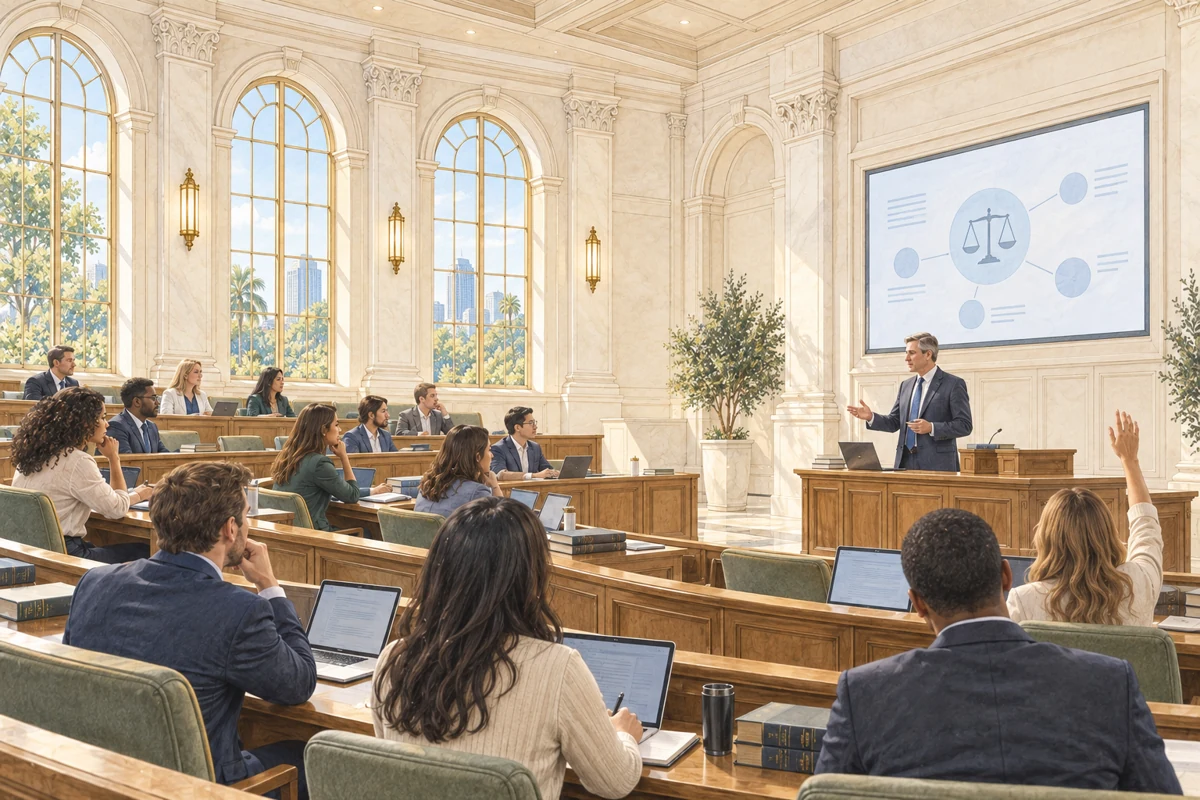
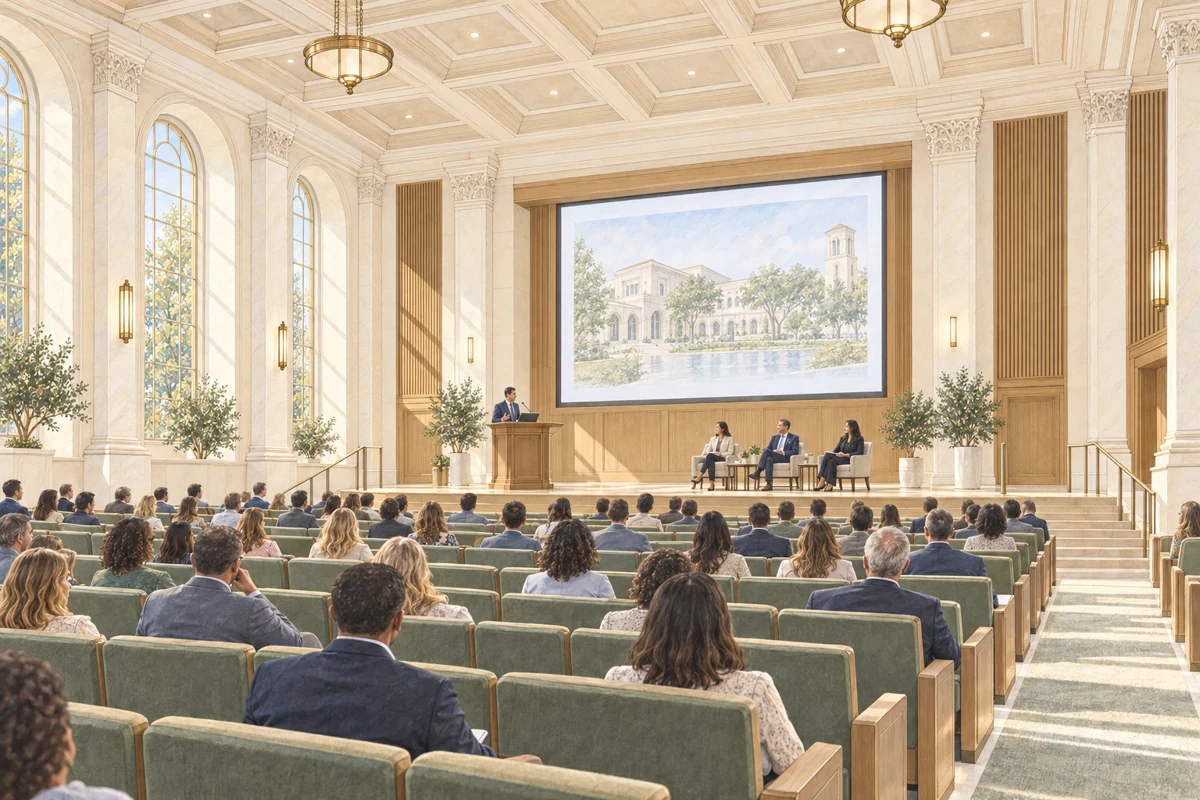
A proposed classical lecture hall
Higher education within reach

Put the tuition ceiling
into the plan.

A later 800-student commuter college example uses $8,000 annual published tuition and a 25% institution-wide aid allowance. Net tuition averages $6,000 per student. Housing and meals remain separate.

Christian colleges already use donor-sponsored tuition and work programs. Crown & Cross must secure the recurring subsidy, qualified faculty, recognized pathway, and facilities before offering degree places.

Outside customers

Earn income
beyond the community.

Start with businesses that can win paying customers before permanent construction. Expand after repeat orders, realistic staffing, and collected cash establish the case.

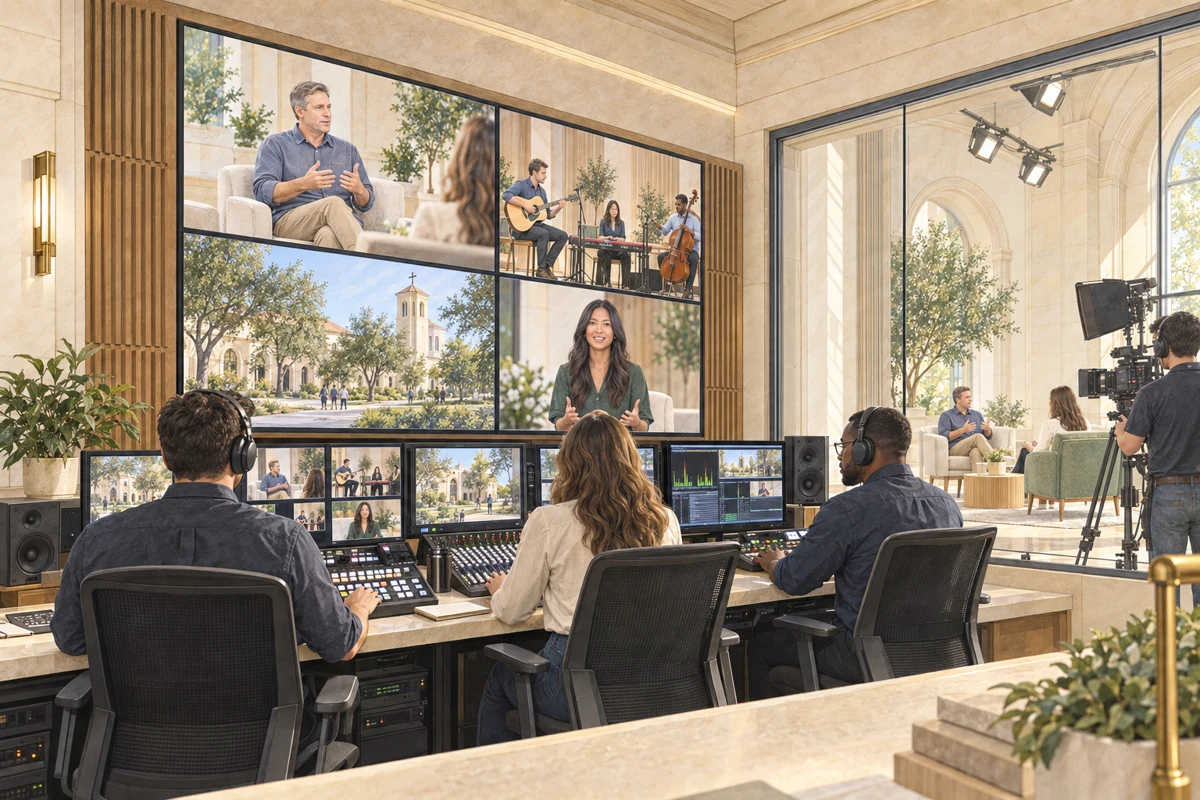
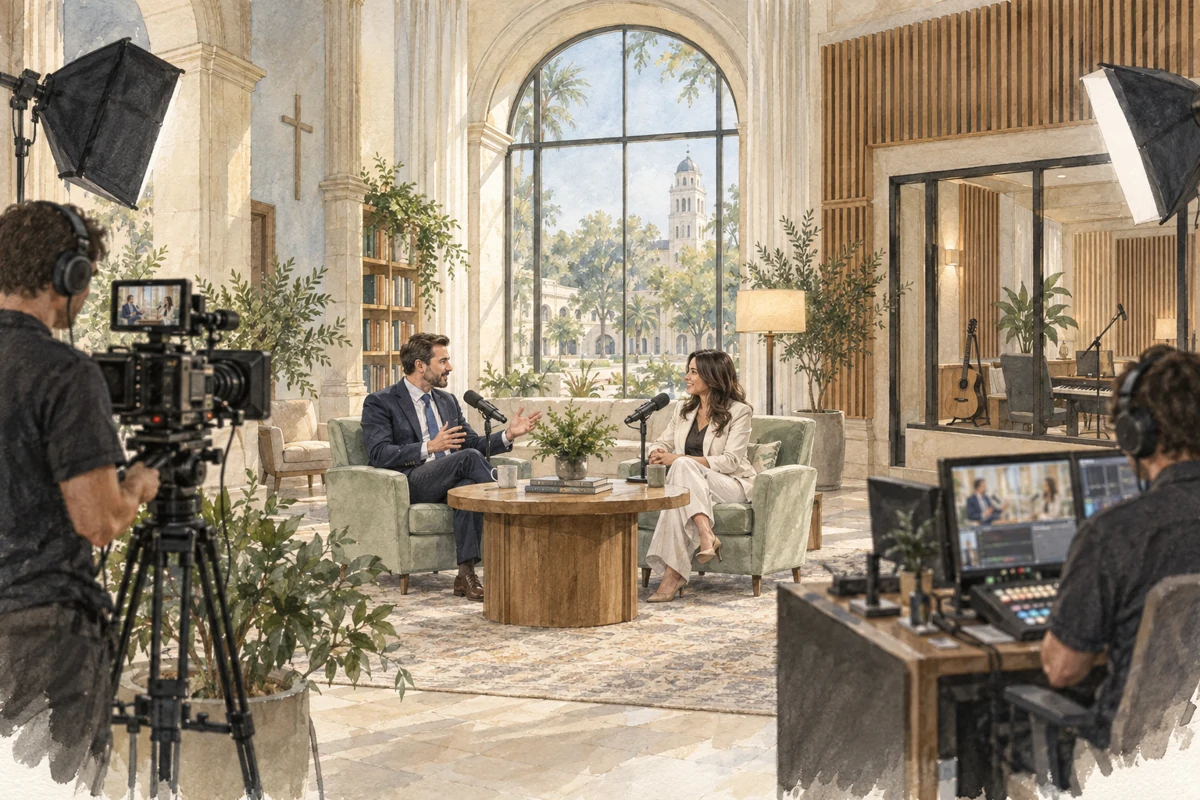
A modern production studio, concept illustrationFirst paid tests

Media & production

Contracts with outside institutions and employers for defined production work.

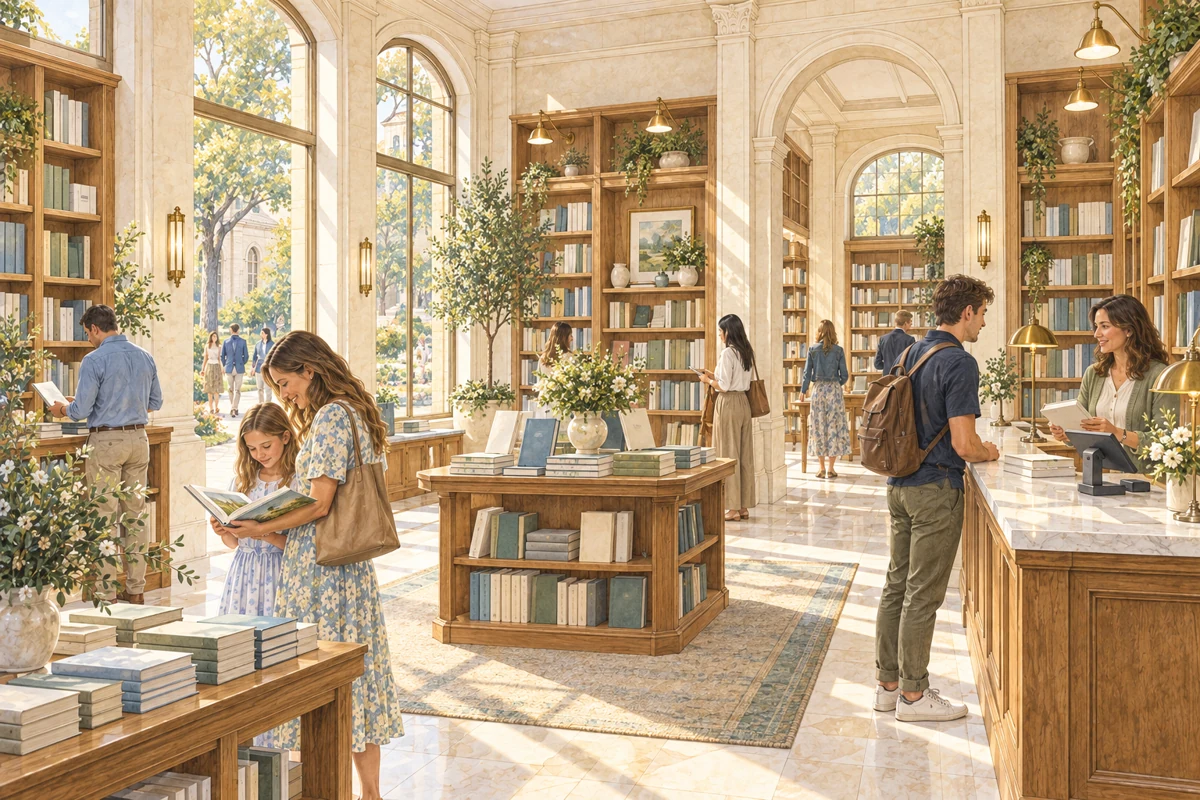
A Christian publishing and bookshop conceptNational distribution

Books & curriculum

Focused titles, teacher materials, institutional licenses, and renewals.

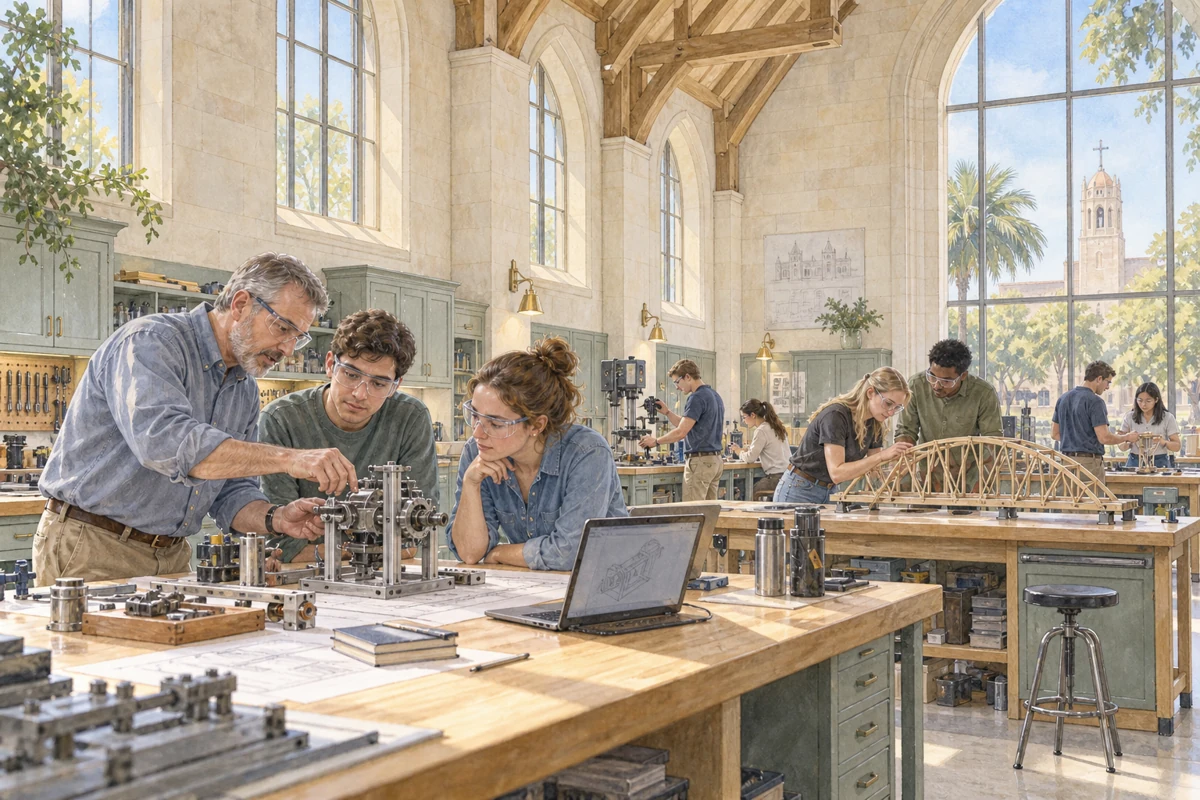
A modern engineering laboratory, concept illustrationEmployer customers

Specialist training

Paid cohorts for specific job skills and professional development.

Illustrative business cases. Demand, supplier costs, staffing, financing, and ownership require independent underwriting.

The working media case generates $1.044m of outside receipts and $69,624 for the mission after its stated costs. Enable JavaScript to compare the twelve business cases, or download the complete model.

What happens before a business pays the mission? +

Collect outside revenue, pay the staff and operating bills, provide for tax, replace equipment, service debt, and retain enough working and growth cash. Divide the remaining distribution according to actual ownership.

The comparisons use a provisional 25% tax allowance where stated. The actual entity and transaction determine tax treatment. An outside investor’s share belongs to that investor. Internal Crown & Cross purchases do not create outside income for the combined organization.

The proposed operating rule budgets no pilot distribution. Established operations would budget at most 70% of the lower of their trailing three-year annual average paid distributions and the reviewed coming-year distribution budget.

What would $5 million
of annual support require?

A national enterprise case needs a much larger customer base than the local campus. The illustrated scale below requires separate leaders, sales channels, staff, and cumulative risk funding.

Capital has a cost

Compare the income
from invested gifts.

Unrestricted endowment
$40,000
Retail, no debt
$52,675
Existing medical property, no debt
$50,135
Professional office, no debt
$43,788
Ground lease
$39,375
Hotel, charity owns half the equity
$20,402

Annual modeled cash per $1m of donated equity or land value, before additional portfolio oversight. Property cases include their stated operating costs, renewal, debt, and tax allowance. Endowment uses a 4% spending policy. These have different risks.

Property, endowment, and the hotel decision +

At the modeled rents and costs, about $98m in debt-free retail assets or $103m in debt-free medical property could supply $5m annually after additional portfolio oversight. A 4% endowment policy needs $125m in invested principal for a $5m distribution.

Debt can lower spendable cash when debt service exceeds the income earned on borrowed capital. An owned income property requires gifted or retained equity; the charity cannot count the returns of property owned by outside investors.

The hotel’s modeled mission cash is weak relative to its capital. Keep it as a separately tested hospitality option, with zero required contribution in the core plan. Venue capital may be justified by ministry and culture even where outside event income is modest.

National patronage

Build the relationships
that sustain a mission.

Develop annual giving, major gifts, church and institutional support, planned gifts, and a national appeal program. Give each channel a budget, responsible staff, and a record of results.

There is evidence
for substantial giving.

Ligonier reported $38.7m in contribution revenue for its year ended June 2025. Hillsdale reported $253.6m to $297.2m annually across its three fiscal years ended June 2023–2025.

Those reports include accounting categories that differ from recurring cash available for operations. Hillsdale’s three-year fundraising expense averaged $76.5m; contribution revenue averaged $273.1m. Donor relationships and distribution require investment.

These are designs for the donor relationships required at each scale. Every gift remains to be earned and voluntarily committed.

Capital gifts, estate intentions, endowment principal, and annual cash must be tracked separately.

The $25m annual campaign design requires 7,254 donors and $3.5m of fundraising expense, leaving $21.5m of net support. No gifts are committed in this design.

The work behind
the gift table.

Gift officers qualify relationships, meet donors, prepare written proposals, and report how gifts were used. Communications staff produce the work and appeals that give people a reason to keep reading and giving.

Count active donors, renewals, cash collected, restrictions, proposal outcomes, acquisition costs, and the contribution after fundraising expense. Measure direct mail and digital appeals in cohorts so early losses and later renewals remain visible.

How retention changes a donor program +

The Fundraising Effectiveness Project’s 2025 sector sample reported 43.3% overall donor retention, 18.9% new-donor retention, and 59.3% repeat-donor retention. A growing national list must replace lost donors as well as add new ones. These sector figures do not forecast Crown & Cross performance.

New donors18.9%
All donors43.3%
Repeat donors59.3%

Keep three
funding commitments distinct.

Annual support

Pays this year’s ministry, teaching, operations, and funded aid.

Construction gifts

Pay land, design, site work, buildings, equipment, and opening costs.

Endowment gifts

Remain invested under their restrictions; the spending policy supplies an annual distribution.

A $100m pledge campaign at 95% collection, with $8m of campaign expense, provides $87m for its project. Fundraising totals and usable project cash are different measures.

The whole operating plan

What will it cost
to serve these people?

Choose a capacity case to inspect every institution. Program fees reduce the subsidy. Gifts, established business distributions, and endowed spending must cover the balance before the corresponding work opens.

Every department, its receipts, and its subsidy +
Later capacity case

The results
we intend to pursue.

Help families teach their children, prepare young adults for faithful work, and make a first career and home more accessible. Count the people served and the quality of the work, with each person's progress recorded once.

Church leaders will report participation, baptisms, discipleship, pastoral care, and the preparation of ministers. Financial models cannot promise conversion or assign a purchase price to faith.

8,000

Children from 4,000 households in the modeled supplementary academy.

800

College places across liberal arts and sciences, technical studies, engineering, and architecture.

400

Paid employer placement starts in the later test. At 80% one-year completion, 320 complete that year.

$16.64m

Gross wages for that 400-person cohort at $20 an hour for 2,080 hours. Employers fund wages and supervision.

Capacity and completion assumptions require evidence before adoption as targets. A first-year placement does not establish full trade qualification. Apprenticeship renewals and continuing cohorts require further employer capacity. These groups overlap and must never be added as unique beneficiaries.

Construction & permanent support

Give every building
a funded purpose.

The selected institutional cost test covers 570,000 gross square feet across several generations. Each building allowance includes a defined area and purpose. The full spatial plan reserves additional capacity that has not yet been priced.

Selected institutional scope$805.16m

In 2026 purchasing power, before additional campaign expense and the excluded uses below.

Buildings, site work & equipment$602.12m
Endowment principal$150.00m
Operating reserve$37.04m
Preopening$16.00m

Excludes pilot fit-out, enterprise risk funding, income-property investments, housing, full medical and law degree schools, further districts, and annual subsidies between phases. Endowment property income belongs inside its spending distribution and cannot be counted again as separate business income.

Inspect building areas, allowances, and opening conditions +
Selected institutionGross square feetHard cost / sq ftHard construction
Sanctuary, chapel and support50,000$900$45,000,000
Homeschool academy90,000$450$40,500,000
Public library and archives40,000$600$24,000,000
Music teaching and rehearsal48,000$700$33,600,000
Dedicated auditorium30,000$900$27,000,000
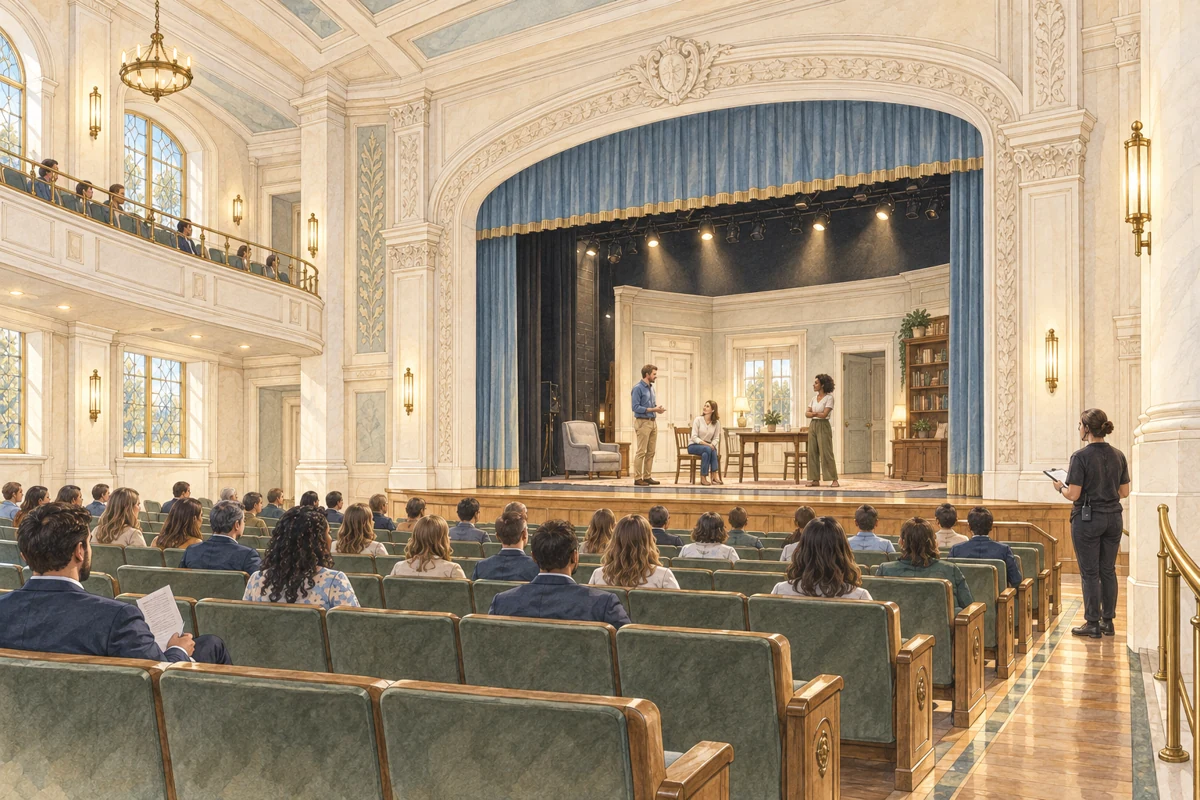
Dedicated theater12,000$1,100$13,200,000
Liberal arts/science classrooms60,000$550$33,000,000
Technical workshops40,000$450$18,000,000
Engineering/architecture facilities60,000$650$39,000,000
Theology and ministry facilities20,000$500$10,000,000
Public press and media30,000$450$13,500,000
Sport and community rooms35,000$400$14,000,000
Family, health and legal rooms35,000$600$21,000,000
Administration and foundation20,000$450$9,000,000

Floor areas multiplied by unquoted 2026 hard-cost allowances. Add 20% design/professional costs, 20% contingency, stated land/site and equipment. Local quantity surveying, site and insurance studies must replace every allowance. Major acoustics, marble, stone, safeguarding and technical specifications need a room program.

The first district requires $223.328m of new net capital in this test. Later additions require $580.944m. These requests credit existing reserves only if the cash remains available. The cumulative balance includes the $883,779 reserve established with the early programs.

The full two-year early-program package needs $9.204m across operations, advancement, fit-out, reserves, and enterprise risk funding. After its conditional program receipts and ordinary giving, $6.254m of additional underwriting remains. Founders can approve a smaller first program against a smaller funded scope.

A separate 100-home affordability test costs $45m and collects $35m from buyers at an average $350,000 price. The remaining $10m requires housing capital assistance. Home sales create no operating profit in that test. Mortgage payments, insurance, taxes, and maintenance must fit the household's budget.

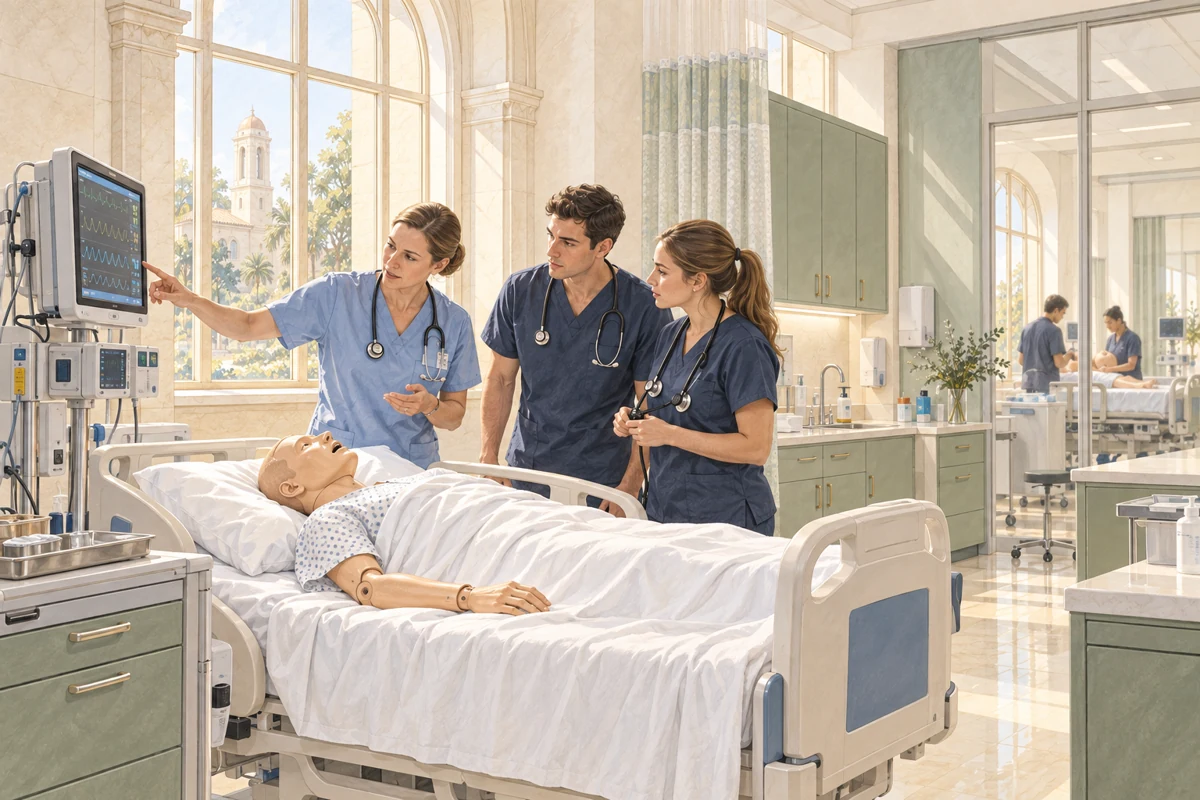
Direct medical and law schools require separate approvals, clinical or practice relationships, faculty plans, capital, and recurring subsidy. Initial health and legal work can use approved partner pathways and professional services.

Research sources & model boundaries +

Research checked September 12, 2026. Published prices and rules will change before the proposed institutions open. The financial models contain design assumptions, documented arithmetic, and source limits. They are not bids, enrollment commitments, investment offers, or pledged support.

Potential institutional partners have not committed to this proposal. Each agreement requires a defined scope, rights, cost, and responsible parties. The source list below records evidence used to study the economics; it does not imply endorsement.

A1Florida DOE: Personalized Education Program FAQCurrent page accessed 2026-09-12A2Step Up: Personalized Education Program2026–27A3Step Up: 2026–27 PEP Family Handbook2026–27A4Step Up: 2026–27 PEP Purchasing GuideUpdated 2026-08-10A5Step Up: Home Education Program External GuideCurrent PDF accessed 2026-09-12A6Step Up: Home Education Program Participation AgreementCurrent PDF accessed 2026-09-12A7Step Up: FTC/FES-EO/PEP Award Amounts2026–27A8Step Up: Unique Abilities Scholarship2026–27A9Step Up: FES-UA Scholarship Amounts2026–27A10AAA Scholarship Foundation: PEP2026–27A11AAA: 2026–27 FTC/PEP/FES-EO Purchasing HandbookRevised 2026-06-29A12Step Up: Become a Service ProviderCurrent page accessed 2026-09-12A13Tampa Bay Community Homeschool: A La Carte TuitionUndated current schedule accessed 2026-09-12A14Tampa Bay Community Homeschool: Hybrid Program TuitionUndated current schedule accessed 2026-09-12A15Tampa Covenant Homeschoolers: Elementary Tuition2025–26A16LILLY Education: Program Guide2026–27A17Astrolabe Institute: Tuition2026–27A18Pensacola Christian College: Cost Breakdown2025–26 breakdown, read with 2026–27 price freezeA19PCC: Tuition, Room and Board Freeze2025-09-03A20College of the Ozarks: Cost and Financial Aid2026–27A21Moody Bible Institute: Tuition and Aid2026–27A22Step Up: Scholarship Help Center2026–27A23Florida DOE: Florida Tax Credit ScholarshipsCurrent page accessed 2026-09-12A24Florida DOE: Family Empowerment ScholarshipCurrent page accessed 2026-09-12G1Ligonier Ministries: Audited Financial Statements 2025Year ended 2025-06-30; audit 2025-12-15G2Hillsdale College: Form 990 for FY June 2025Year ended 2025-06-30; filed 2026-05-15G3Hillsdale College: Form 990 for FY June 2024Year ended 2024-06-30; filed 2025-05-09G4Hillsdale College: Form 990 for FY June 2023Year ended 2023-06-30; filed 2024-05-14G5Hillsdale College: FY2025 Form 990 Schedule OYear ended 2025-06-30; filed 2026-05-15G6Compassion International: 2025 Accountability ReportFiscal 2025G7National Christian Foundation: Consolidated Audited Financial StatementsYear ended 2025-12-31; audit 2026-07-08G8National Christian Foundation: 2025 Impact Report2025 report published 2026G9National Christian Foundation: Giving FundCurrent page accessed 2026-09-12G10Grove City College: $70 Million Estate Gift2025-03-04G11FEP: 2025 Q4 Report OverviewReleased 2026-04-21; calendar 2025G12FEP: 2025 Q4 Retention by Donor TypeCalendar 2025G13FEP: 2025 Q4 Dollars by Donor SizeCalendar 2025G14Maclellan Foundation: FAQCurrent page accessed 2026-09-12G15Maclellan Foundation: Grantee ResourcesCurrent page accessed 2026-09-12G16Hillsdale College: National Educational Outreach2025 release accessed 2026-09-12REV01Lifeway Christian Resources audited consolidated financial statements, FY2025Accessed September 2026REV02News Corp FY2025 earnings releaseAccessed September 2026REV03Classical Academic Press school ordering and termsAccessed September 2026REV04ClassicalU branded learning tracks for schoolsAccessed September 2026REV05IngramSpark wholesale discountsAccessed September 2026REV06IngramSpark book returnsAccessed September 2026REV07Amazon KDP paperback printing costAccessed September 2026REV08Lemonlight published video production pricesAccessed September 2026REV09Superside subscription pricingAccessed September 2026REV10Wistia 2026 State of VideoAccessed September 2026REV11Lifeway Hyfi digital curriculum subscriptionsAccessed September 2026REV12USF Modern Project ManagementAccessed September 2026REV13NCEES Squared 2025Accessed September 2026REV14Florida Board of Professional Engineers continuing educationAccessed September 2026REV15PDH-Pro Florida 18-hour engineering packageAccessed September 2026REV16Sunken Gardens weddings and eventsAccessed September 2026REV17City of St. Petersburg photography guidelinesAccessed September 2026REV18AIA Firm Survey Report 2024 infographicAccessed September 2026REV19Deltek 47th Clarity Architecture and Engineering study launchAccessed September 2026REV20Matthews Tampa Retail Market Report Q2 2026Accessed September 2026REV21CBRE Q2 2026 US Retail FiguresAccessed September 2026REV22Colliers sale of Largo retail centerAccessed September 2026REV23IRS Publication 598, tax on unrelated business incomeAccessed September 2026REV24HVS US Hotel Development Cost Survey 2026Accessed September 2026REV25Visit Tampa Bay 2025 tourism economic impactAccessed September 2026REV26Visit Tampa Bay April 2025 hotel resultsAccessed September 2026REV27JLL 2026 medical outpatient perspectiveAccessed September 2026REV28CBRE Q2 2026 US medical outpatient figuresAccessed September 2026REV29JLL 2026 medical outpatient fit-out guideAccessed September 2026REV30Colliers Tampa Bay Office Q2 2026Accessed September 2026REV312020 US Religion CensusAccessed September 2026REV32NACUBO 2025 endowment study release and spending-policy explanationAccessed September 2026REV33NACUBO endowment spending policies explainedAccessed September 2026AC01Step Up For Students: 2026-27 Private School and PEP Scholarship Amounts2026-27AC02Step Up For Students: 2026-27 PEP Family Handbook2026-27, revised July 1, 2026AC03Step Up For Students: PEP Purchasing Guide2026-27, revised July 1, 2026AC04Step Up For Students: Home Education Instructional Program External GuideUndated current one-page guideAC05Florida Department of Education: Personalized Education Program FAQsCurrent page accessed September 12, 2026AC06Step Up For Students: Personalized Education ProgramCurrent 2026-27 pageAC07O*NET OnLine, U.S. Department of Labor: Florida secondary teacher wagesBLS 2025 wage dataAC08City of Tampa: Parks and Recreation Rental FacilitiesRates stated January 21, 2026; page updated September 4, 2026AC09Tampa Bay Community Homeschool: A-La-Carte TuitionUndated current scheduleAC10Tampa Bay Community Homeschool: Hybrid Program TuitionUndated current scheduleAC12AAA Scholarship Foundation: Florida Personalized Education ProgramCurrent 2026-27 pageAC13Step Up For Students: 2026-27 Unique Abilities Scholarship Amounts2026-27
The development horizon

A public launch in 2047.
A task for generations.

Useful work can begin long before the full campus exists. Each expansion follows the people, demand, permissions, and continuing support required to operate it.

Form the founding team

Build capable businesses, develop operators, prepare institutional plans, and establish relationships with patrons and partners.

Before the next commitment

Responsible leaders, sound financial reporting, and a funded scope for the first work.

The dates describe the intended sequence. They are not construction or opening commitments.

Authority & accountability

Preserve the faith.
Keep the finances open.

Founding leadership needs defined authority to protect doctrine, mission, and the appointment of responsible leaders. Financial decisions, conflicts, and misconduct require independent review.

Adopt written reserved powers, clear institutional responsibilities, audited or independently reviewed accounts appropriate to scale, restricted-fund reporting, and a succession process. The church will operate under its adopted polity.

Doctrine & mission

Written convictions and defined reserved powers.

Qualified institutional leaders

Clear responsibility for teaching, worship, business, and operations.

Independent financial oversight

Budgets, related-party review, financial reporting, and donor restrictions.

A classical lecture hall filled with people, concept illustration
The founding invitation

Help build
what comes next.

We are assembling the people who can build the businesses, leadership, plans, and financial capacity behind this vision.

Business operators & capital partners +

Help Noble develop capable companies, operators, and employment relationships. Business investment has its own terms and review.

Founding patrons & financiers +

Fund a defined piece of founding work, scholarship support, an institutional plan, or an independently assessed commercial opportunity.

Institutional & professional leaders +

Bring academic, church, legal, financial, property, cultural, or operational experience to a staffed and costed first offering.

Advancement & communications leaders +

Build the donor relationships, appeals, gift conversations, reporting, and public communication required for a lasting mission.

Start a founding conversation will@crownandcross.co
Take the vision with you

Read it.
Study the numbers.

The document and supporting materials explain the institutions, assumptions, and work required to begin.